

There are countries that are made to be shared with people you already know, at a pace nobody else is setting. Morocco is one of them. A private tour puts your group alone on the road to Sahara, in the riads you stay in, in the desert camp at night, with the rest of the country moving around you instead of the other way round.
What that actually looks like depends entirely on who’s in the car. A couple, a family spanning three generations, a group of old friends, a solo traveler: each gets something different out of traveling privately with dedicated driver-guide, because each one needs Morocco to work differently for them.
That’s the idea behind our custom tours in Morocco: the journey takes its shape from the people making it. Here’s how that plays out, depending on who you’re travelling with.
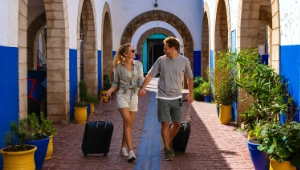
Morocco doesn’t need dressing up for two people travelling together. A bowl of msemen and mint tea on a rooftop, with no waiter hovering, already does the job. So does a desert night with nobody else’s schedule to answer to, or an Atlas afternoon where your guide decides when to stop.
Travelling privately means you set that pace yourselves, lingering an extra hour in a Fes courtyard, or cutting a museum stop short because the light in Essaouira is too good to leave. Your driver adjusts, your guide reads the day, and the plan bends toward what you actually want.
Couples with us tend to land in smaller riads, desert camps built for two, coastal towns with slow mornings. Those places reward not being rushed.
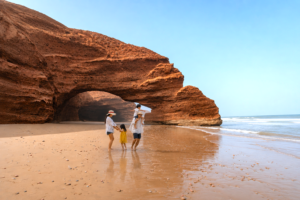
Travelling with children changes what a day in Morocco needs to look like. Travelling with three generations at once changes it again. Going private means the itinerary answers to your family instead of the other way round: a shorter driving stretch when someone’s tired, an extra stop for ice cream in Chefchaouen, a slower start after the desert camp.
Your driver absorbs the logistics without you having to manage it: car seats, rest breaks, a grandparent who needs level ground instead of stairs, a teenager who’d rather ride a camel twice than visit another museum. We’ve built itineraries where the youngest traveller was six and the oldest was eighty, on the same trip, because the pace stayed flexible enough to hold both.
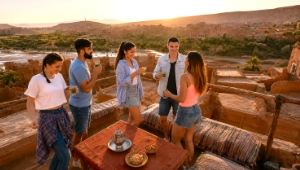
A group of friends already has its own rhythm before they land: inside jokes, an appetite for late dinners, someone who always wants one more stop. Travelling privately keeps that rhythm intact instead of folding it into a bus full of strangers.
It plays out like a proper road trip: your own vehicle through the Atlas passes, a desert camp booked for your group alone, a riad courtyard that belongs to nobody else while you argue over the day’s photos. Dinners run long, and if half the group wants to hike while the other half sleeps in, the day can actually split that way. It’s Morocco run at the speed friends already travel at, no detours to vote on.
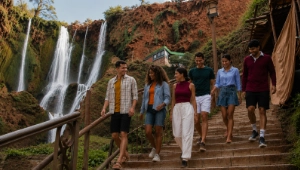
A leadership team or small business group travelling together needs something a standard tour doesn’t offer: discretion, a schedule that holds even when plans shift midweek, and service nobody has to think twice about. That’s the ground a private tour covers.
Being based in Erfoud matters here: a desert night runs on real local knowledge, not a booking made from abroad. The same holds in the north, where a private driver and guide know which riad has a quiet room for a call before dinner, and how to move a group of executives through Marrakech without it turning into a tour bus stop. The destination does the memorable part while the logistics disappear into the background, which is what makes a trip feel considered rather than corporate.
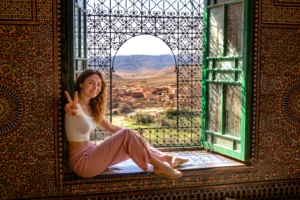
Travelling alone in Morocco is different from travelling alone in most places. The medinas are built to disorient, the touts know exactly who’s new in town, and one wrong turn in Fes can eat an hour. A private guide changes that equation without changing what solo travel is supposed to feel like.
You’re still making the decisions: where to eat, how long to stay somewhere, if today calls for walking or resting. What changes is you’re not doing it blind, and not carrying the low-grade vigilance solo travel elsewhere often demands. A driver who knows the roads and a guide who knows which quarter of Marrakech rewards an evening walk make the difference between cautious and comfortable. Company on the road, without losing the independence you came for.
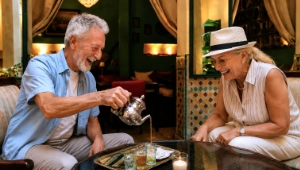
There’s a version of Morocco built for people who don’t want to be moved through it quickly: fewer hotel changes, mornings that start when you’re ready, roads driven at a pace where the Atlas actually looks like the Atlas instead of passing in a blur.
Going private is built around that. Instead of a new city and a new check-in every night, the route settles into fewer bases with day trips out from each one, so you’re unpacking twice instead of eight times. Stairs, distances, and rest stops become things your driver and guide plan for in advance. You still see the kasbahs, the souks, the desert, just without needing a rest day to recover from your holiday.
Beyond the practicalities, a private trip changes what you actually get to see of Morocco, not just how comfortably you see it. These are the parts of the country that rarely make it onto a group itinerary.
Morocco changes by the week more than most travelers expect. A market town on its souk day looks nothing like the same town two days later, a mountain pass that’s clear in April can be closed by snow in January, and a coastal town in August moves at a different speed than it does in October. Knowing which week suits Essaouira, or which month suits the Sahara, matters as much as knowing which town to visit. That’s knowledge built from being here year-round, not a website’s guess.
A private trip opens doors that a coach tour never reaches: a family-run kasbah in the Dades valley, a riad in Fes still lived in by the family that owns it, a guesthouse in a village with six rooms and a real kitchen. These places don’t take block bookings and rarely appear on booking platforms, so they stay smaller and quieter than the hotels built for groups. Staying in them is a different way of seeing Morocco than a chain hotel with a Moroccan facade.
Group tours often package culture into a scheduled show: a folklore dinner, a rug demonstration timed to the bus’s departure. Traveling privately, those moments happen because they’re real. A stop for tea with a family your guide has known for years, an actual conversation with an artisan mid-work instead of a sales pitch, a meal cooked in a home rather than a tourist restaurant. The difference isn’t the itinerary. It’s if the moment was arranged for you or happened because you were already there.
The Sahara at sunrise looks different when you arrive with fifteen coaches of tourists than when you arrive alone. A private route can reach the same dune, the same kasbah, the same viewpoint over the Todra Gorge, just an hour before or after the convoys do. It isn’t a different Morocco, it’s the same country seen without a crowd standing in front of it. Sometimes that means a longer drive on a back road instead of the main highway, a trade most people take gladly.

